
Our Vision & Goals
We aim to identify new, local routes to market that can deliver a sustainable premium back to primary producers and achieve positive outcomes for all actors.
Sustainability
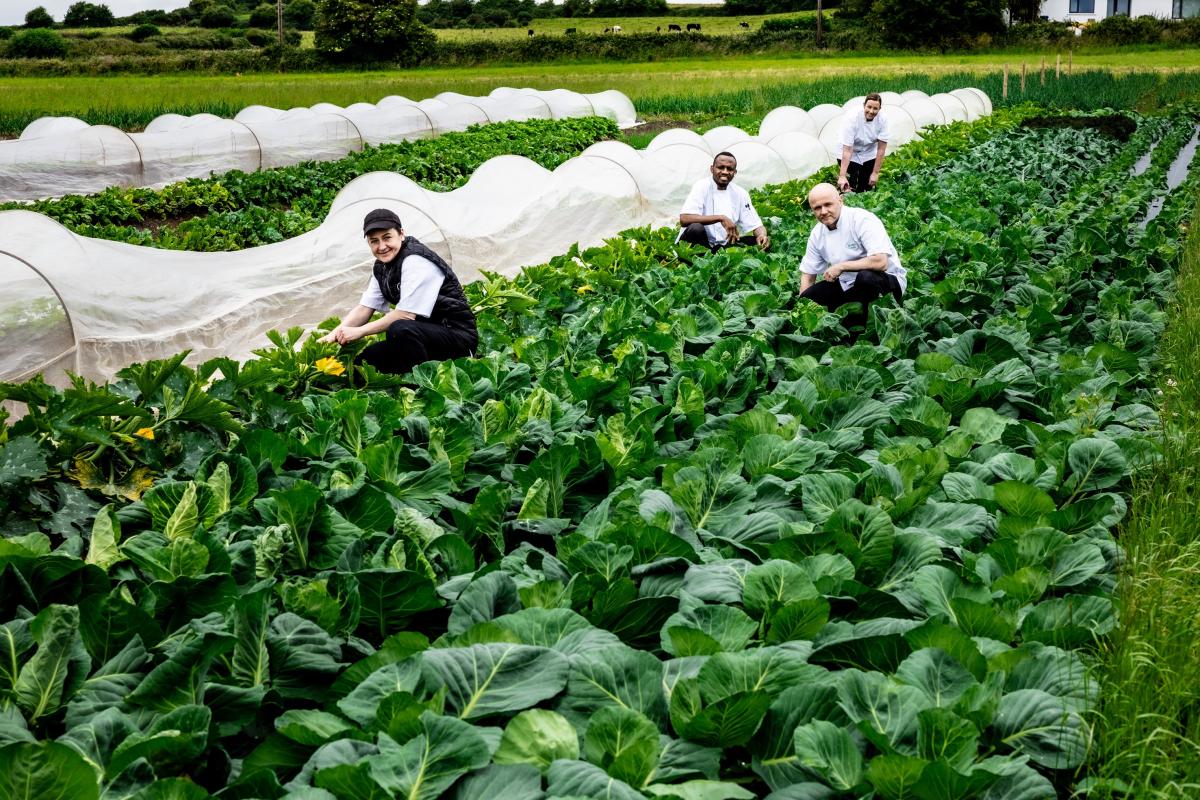
Organic farming is based on taking care and nourishing the soil with only natural methods such as composts, manures and regular crop rotations. Healthy soils are the foundation of organic food production.
Organic livestock farmers use only natural means such as clover and combination crops like peas, oats and barley to keep their cattle and land nourished. When animals need to be housed over the cold and wet winter months, animals are provided with comfortable bedding, generous space and good ventilation.
Organic farming helps to protect biodiversity by maintaining suitable habitats for plants, animals and wildlife. In organic farming there is a focus of naturally minimising disease through preventative methods like moving animals to fresh abundant pasture as they remain outdoors nearly all year round while also managing flock sizes.
In organic agriculture the grass is allowed to grow at its’ natural pace with no synthetic fertilisers or pesticides used. Dairy cattle graze naturally as they roam the generous lush pasture area available to them. Organic farmers encourage wildlife to help control pests and disease.
Community building
To facilitate a functional bio-district, a strong network of Organic producers and focused supply chain is essential. To date, no collective Producer Network for the mid-west Organic sector has been established. A Producer network will be established to ensure a strong efficient and effective supply of organic produce to the Mid-West region. The quality mark being organic certification, and the key USP being geographic proximity of approximately <2 hours farm to table.
Many individuals and smaller collectives have attempted types of collective branding, shared logistics, and digital solutions, most of which have either failed or become stagnant. The Project Team are keenly aware of the vast amount of work that has been carried out to identify issues in this sector and a key objective of this project will be to collate efforts to date in the region. Learnings from previous initiatives will be adapted into the solutions.
Short supply chains
Recent developments in the food market show a renaissance of traditional, direct ways of delivering food, coupled with an emergence of more innovative types of distribution systems which provide direct links between producers and consumers. These numerous types of short food distribution channels, commonly named short food supply chains, now coexist with longer, more ‘conventional’ channels of (mass) food distribution.
A short food supply chain (SFSC), as defined by the EU, is a supply chain involving a limited number of economic operators, committed to cooperation, local economic development, and maintaining close geographical and social relations between food producers, processors and consumers.